
Have an emergency? Call us now on 07732 234231. Available 24/7 with a 30 minute response time.

Boiler problems can strike at the worst times, and in many british homes, regular maintenance is the only way to keep the heat on and bills under control. A well maintained boiler can cut emergency call outs by up to 40 percent, saving both money and stress. Knowing the right steps not only helps protect your heating system but can also extend its lifespan, giving you confidence as you look after your home’s comfort and safety.
| Essential Insight | Detailed Explanation |
|---|---|
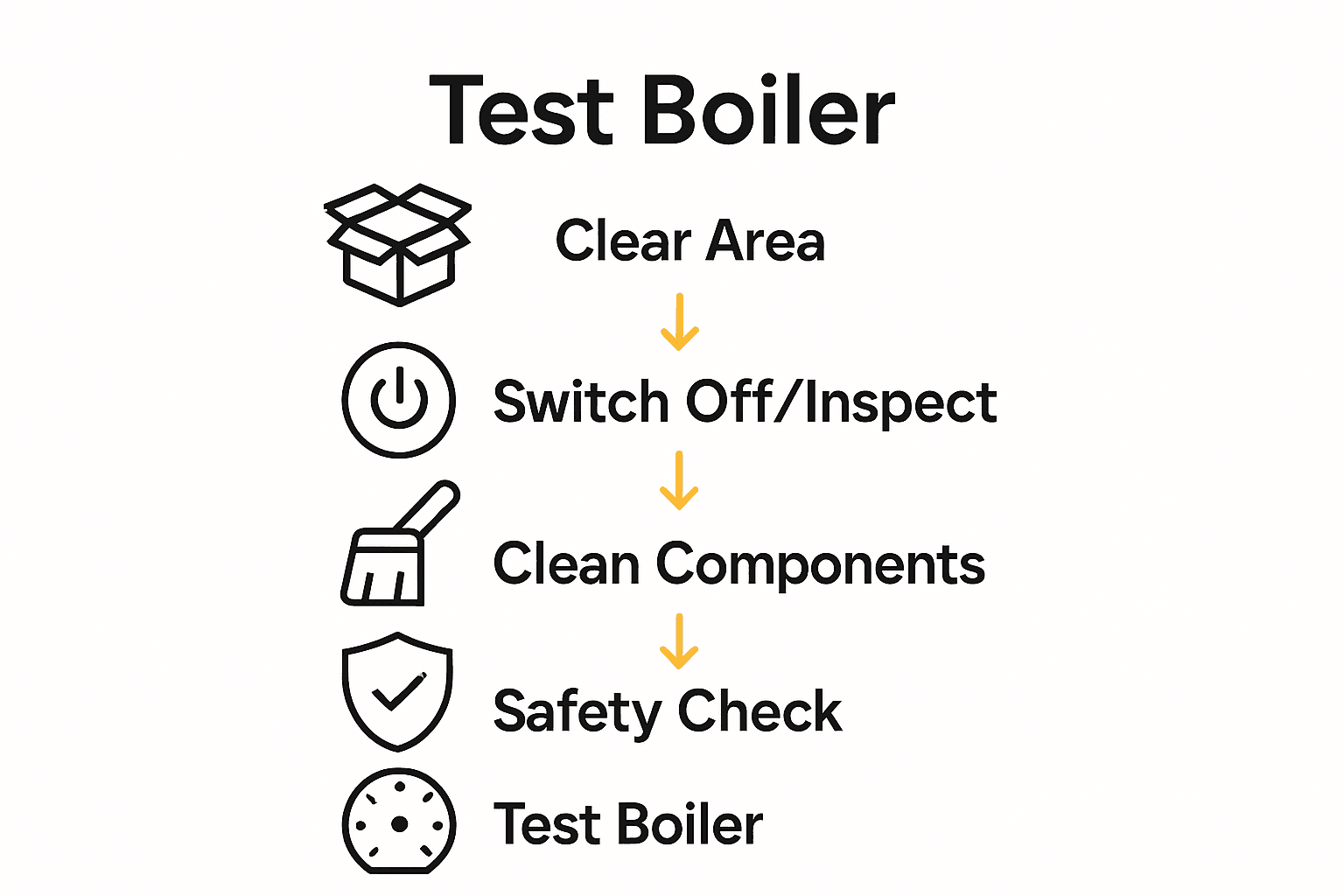
| 1. Clear the Maintenance Area | Remove obstacles near your boiler for a safe and efficient workspace. This makes access easier during maintenance tasks. |
| 2. Switch Off the Boiler Safely | Always turn off the power before starting maintenance to avoid electrical hazards and inspect for visible issues. |
| 3. Clean Key Components Thoroughly | Regular cleaning of internal parts enhances boiler efficiency; refer to your manual for specific cleaning instructions. |
| 4. Check Safety Devices and Settings | Inspect essential safety features regularly to ensure the boiler operates safely and efficiently; consult a professional for uncertainties. |
| 5. Test Boiler After Maintenance | After servicing, confirm that the boiler operates correctly and safely by observing its start-up and checking pressure stability. |
Before diving into boiler maintenance, you need a clean workspace and the right equipment. According to NHG, it’s crucial to clear the area around your boiler and collect all necessary tools before starting any work.
Start by removing any clutter or stored items near your boiler. You want a clear, accessible workspace that allows you to move freely and safely. This means shifting boxes, cleaning supplies, or any household items that might obstruct your maintenance area. As Home Group recommends, keeping the surrounding area free from obstructions will make your maintenance tasks much easier.
For your toolkit, gather essential items like a torch, adjustable spanner, protective gloves, a clean cloth or towel, and any specific tools recommended in your boiler’s manual. Having everything prepared beforehand prevents interruptions and helps you work efficiently. A well organised workspace is the foundation of successful boiler maintenance.
Once your area is clear and tools are ready, you are prepared to move on to the next stage of your boiler servicing process.
Before conducting any boiler maintenance, safely switching off and thoroughly inspecting your system is crucial. According to Citizens Advice, if your boiler appears to be malfunctioning, the first step is to turn it off and investigate potential issues.
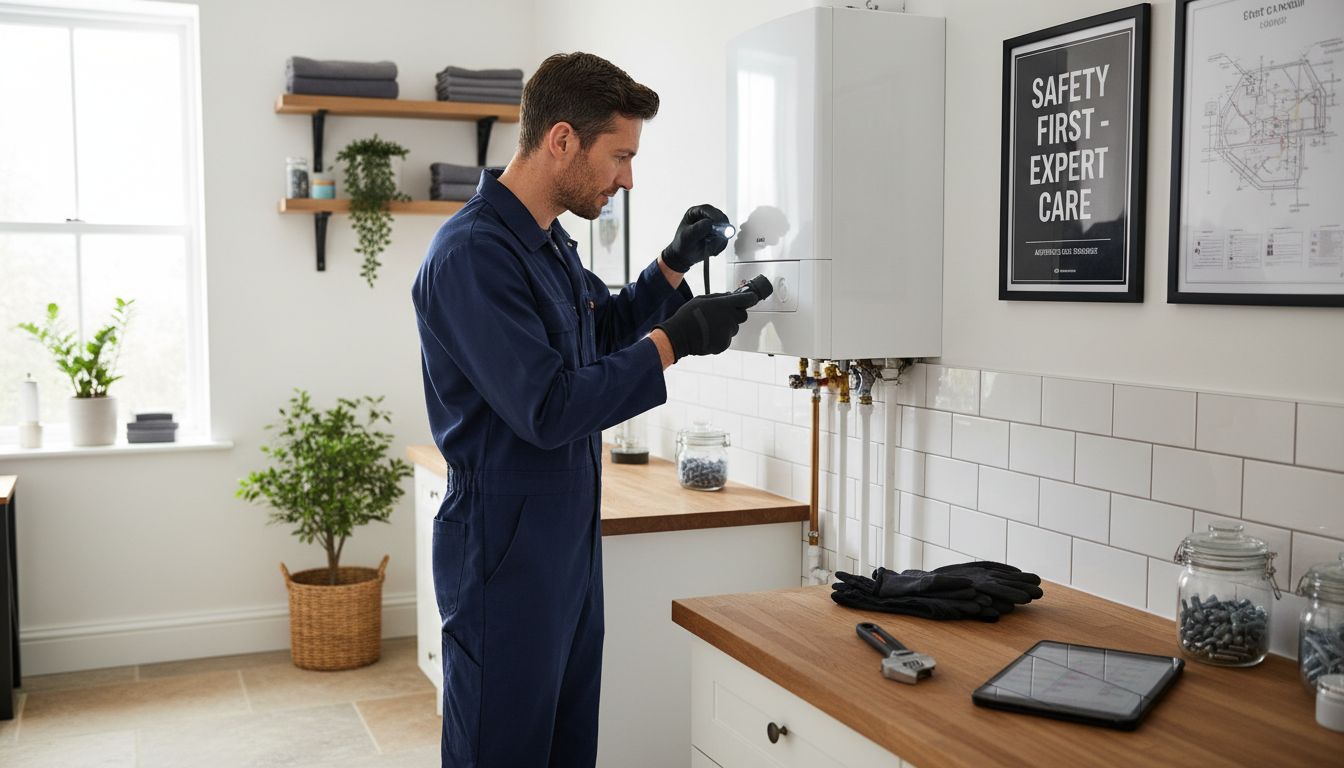
Start by locating your boiler’s power switch or main electrical isolation switch. Carefully switch off the power to prevent any electrical risks during inspection. Next, visually examine the boiler for any obvious signs of damage, such as water leaks, unusual rust, or visible corrosion. Check the pressure gauge and look for any error messages on the display panel that might indicate underlying problems.
As recommended by NCHA, if you are uncertain about any irregularities, consult your manufacturer’s guide or contact a professional heating engineer. Do not attempt complex repairs if you lack technical expertise. A quick visual inspection can help identify potential issues early, potentially saving you from costly future repairs.
With the boiler safely switched off and initially inspected, you are now ready to move forward with the next steps of your maintenance process.
Cleaning your boiler’s key components is essential for maintaining its efficiency and longevity. According to HHIC, regular servicing involves thorough cleaning of components to ensure optimal operation, and it is crucial to follow the manufacturer’s specific instructions.
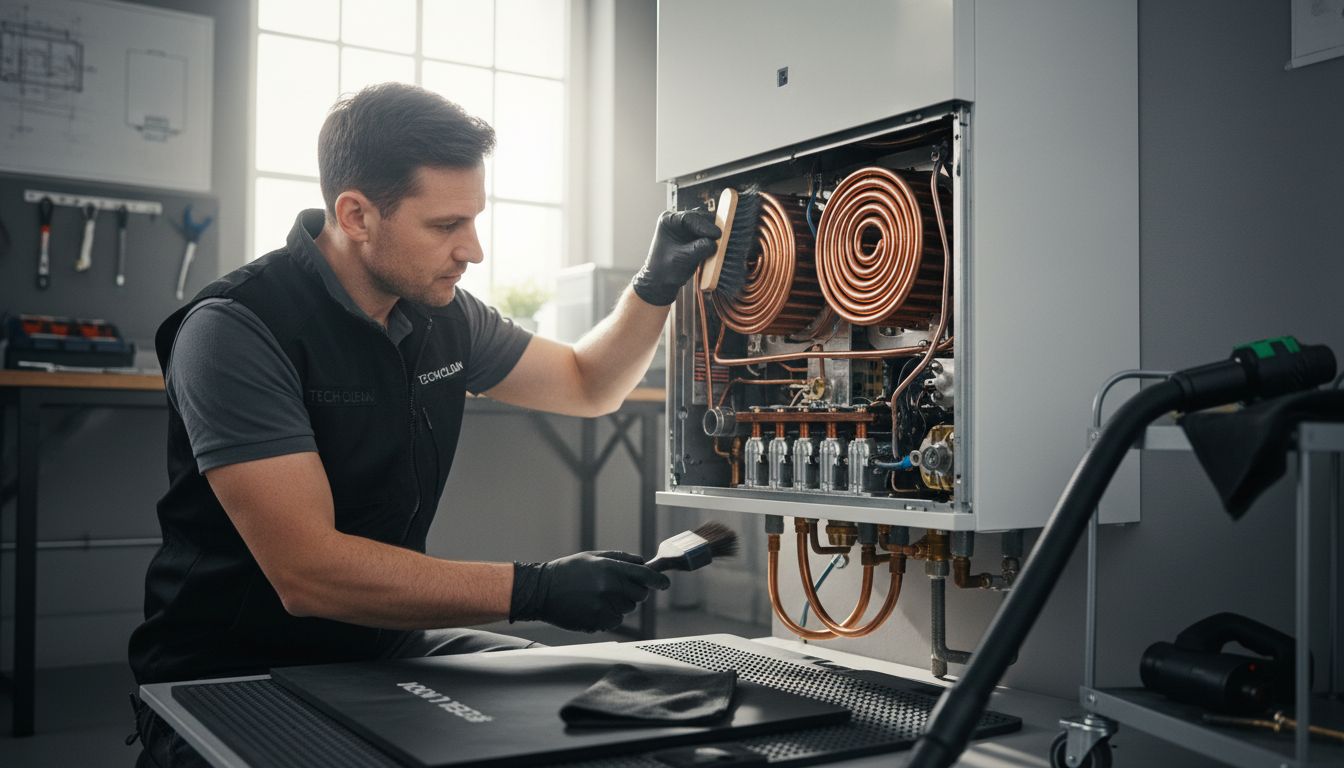
Begin by carefully removing the boiler’s outer casing, ensuring you have disconnected the power supply completely. Use a soft brush or a clean, dry cloth to gently remove dust and debris from visible components like the heat exchanger, burners, and internal surfaces. Pay special attention to areas where dirt and grime can accumulate, such as around seals and joints. Avoid using water or liquid cleaners unless specifically recommended by your boiler’s manufacturer.
As recommended by Casa Group, annual boiler servicing is not just about cleaning, but also about maintaining overall system efficiency and safety. If you encounter any areas with significant buildup or are unsure about how to clean a specific component, it is always best to consult a professional heating engineer who can perform a comprehensive service.
With the key components now cleaned, you are prepared to move forward to the next stage of your boiler maintenance process.
Ensuring the safety and proper functioning of your boiler is a critical part of maintenance. According to Age UK, it is essential to have your boiler serviced annually by a Gas Safe registered engineer to verify that all safety devices are operating correctly.
Begin by carefully examining key safety mechanisms such as the pressure relief valve, temperature controls, and flame supervision device. Check that the pressure gauge is within the manufacturer’s recommended range and that safety cut-off switches respond appropriately when tested. Look for any warning lights or error codes on the control panel that might indicate potential issues with the boiler’s safety systems.
As NCHA recommends, regular maintenance involves thoroughly checking safety devices and settings to guarantee the boiler operates both safely and efficiently. If you notice any unusual readings, hear strange noises, or feel uncertain about any aspect of the safety check, it is crucial to contact a professional heating engineer immediately. Your safety is paramount, and some checks are best left to qualified experts.
With the safety devices and settings carefully inspected, you are now ready to proceed to the next stage of your boiler maintenance process.
Testing your boiler after maintenance ensures it is functioning safely and efficiently. According to NHG, it is crucial to test the boiler thoroughly after any maintenance work to confirm that the pressure remains stable and all systems are operating correctly.
Begin by carefully turning on the boiler and monitoring its startup sequence. Listen for any unusual sounds and observe the flame colour through the inspection window if possible. Check that the heating and hot water systems activate smoothly, with radiators heating evenly and water reaching the expected temperature. Pay close attention to the pressure gauge, ensuring it remains within the manufacturer’s recommended range during operation.
Home Group recommends regularly testing your boiler, especially before colder months, to prevent unexpected issues. If you notice any irregularities such as inconsistent heating, strange noises, or fluctuating pressure, it is advisable to contact a professional heating engineer for a comprehensive assessment. A thorough test now can help you avoid potential breakdowns and ensure your heating system runs smoothly throughout the season.
With the boiler tested and performing correctly, you have successfully completed the key steps of your maintenance process.
Maintaining your boiler with proper cleaning, safety checks, and testing can be a challenge without the right experience and tools. You want to avoid unexpected breakdowns, costly repairs, and potential safety risks while ensuring your heating runs smoothly when you need it most. The article “Step by Step Boiler Maintenance for Safe, Efficient Heating” highlights the importance of careful inspection, pressure monitoring, and professional servicing to safeguard your home’s warmth.

Don’t risk your comfort or safety by tackling complex boiler maintenance alone. With over 18 years of trusted experience, Skan Heating offers reliable boiler repair, installation, and servicing across Portsmouth and Waterlooville. Our certified engineers handle everything from pressure issues to safety device checks with precision and care. Act now to secure your heating system before the cold sets in by visiting Skan Heating’s main page and arranging expert support tailored to your needs. Your peace of mind starts with a simple call or click.
Start by clearing any clutter or stored items around your boiler to ensure a clean and accessible workspace. Gather all necessary tools, such as a torch, adjustable spanner, and protective gloves, before beginning your maintenance.
Always switch off the power to your boiler using the main electrical isolation switch before starting any inspection. Perform a visual check for water leaks, rust, or corrosion, and ensure the pressure gauge is functioning correctly.
Focus on cleaning important components like the heat exchanger, burners, and internal surfaces using a soft brush or dry cloth. Make sure to avoid using water or liquid cleaners unless specifically recommended by your boiler’s manufacturer.
Examine the pressure relief valve, temperature controls, and safety cut-off switches to ensure they are working correctly. Test the pressure gauge to confirm it remains within the manufacturer’s recommended range during operation.
When testing your boiler, listen for unusual sounds, check the flame colour, and ensure that the heating and hot water systems activate smoothly. Pay attention to the pressure gauge to make sure it stays stable and within the desired range as the system operates.
It is advisable to conduct boiler maintenance annually to ensure efficiency and safety. Set a reminder to perform a thorough inspection and cleaning at least once a year, especially before the colder months.


